Shopping Cart
Your cart is empty.
Indian monsoons and coastal humidity are the biggest enemies of demi-fine jewellery. Moisture in the air reacts rapidly with the copper alloys found in 925 sterling silver and gold-plated pieces, accelerating the oxidation process that turns your favorite chains dull, yellow, or completely black.
While investing in high-quality anti-tarnish jewellery is the best first step, proper storage is what guarantees your pieces will last for years. You do not need expensive humidors to protect your collection; a few smart, inexpensive household hacks will keep your metals brilliant in the most humid climates.
The fundamental rule of jewellery storage is simple: keep the air out and keep the moisture away.
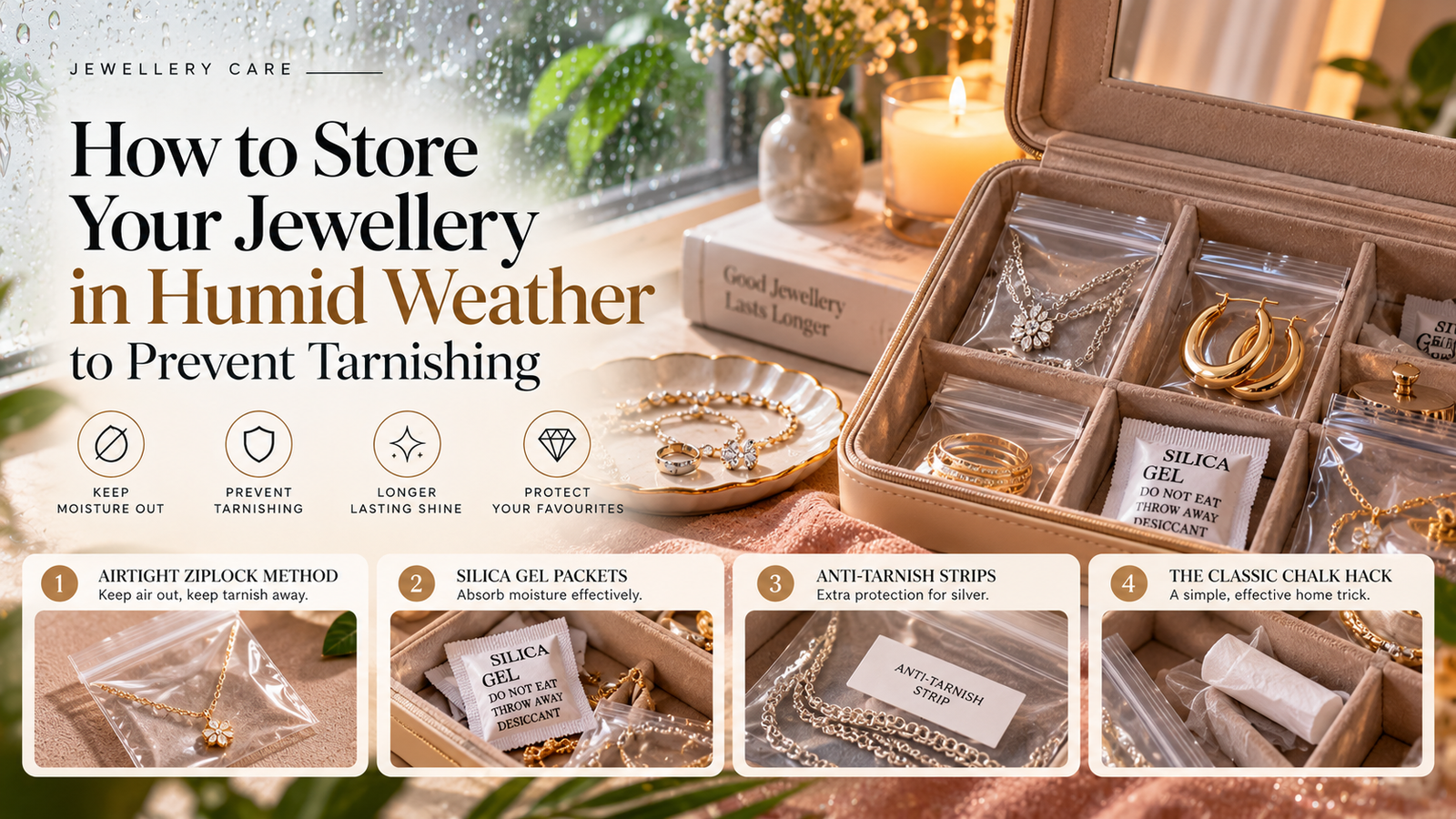
Air is the primary catalyst for oxidation. Never leave your silver or gold-plated jewellery sitting out on a vanity tray or hanging on an open stand. Store every single necklace, ring, and pair of earrings in its own small, airtight plastic ziplock pouch. Before sealing the bag, gently press down to squeeze out as much excess air as possible. This also prevents chains from tangling and scratching each other.
Never throw away the tiny silica gel packets that come inside new shoe boxes, handbags, or pill bottles. These packets contain powerful desiccants that actively absorb surrounding moisture. Toss two or three packets directly into your main jewellery drawer or storage box. Once the beads change color or feel heavy, simply replace them.
For your premium 925 sterling silver pieces, anti-tarnish strips are a game changer. These are small, chemically treated pieces of paper designed to absorb sulfur and moisture from the air before they can reach the metal. Slide one strip into the ziplock bag alongside your silver necklace to keep it factory-fresh for months.
If you do not have silica gel or anti-tarnish strips, use this classic Indian household trick. Standard blackboard chalk is highly porous and naturally absorbs ambient moisture. Wrap a piece of plain white chalk in a thin tissue paper and place it in the corner of your jewellery box to keep the internal environment completely dry.
Never store your everyday jewellery in the bathroom cabinet. The daily steam from hot showers creates a highly corrosive environment that will strip gold plating and oxidize silver within weeks.
While traditional velvet presentation boxes look luxurious, velvet is a fabric that easily absorbs and retains moisture from the air. Storing your silver in a velvet box during the monsoon essentially traps the metal in a damp environment.
Certain types of treated wood release natural acids and gases over time that actively accelerate the tarnishing process of sterling silver.
Even the best storage methods will fail if you put away dirty jewellery. When you take off your pieces at the end of the day, they are covered in microscopic layers of salty sweat, body oils, perfume, and sunscreen.
Before placing your items back into their ziplock pouches, take ten seconds to gently wipe them down with a dry, soft microfiber cloth. Removing this acidic residue ensures the metal remains clean and stable while in storage. For a deeper cleaning routine, refer to our guide on how to clean tarnished silver jewellery at home.
No. Always store each piece in its own individual ziplock bag. Metals rubbing against each other cause micro-scratches that dull the polish, and different metals (silver, gold-plated, stainless steel) can trigger galvanic corrosion when stored in direct contact during humid conditions.
Most silica gel packets have indicator beads that change from blue or orange to clear or green when fully saturated. In highly humid coastal cities like Mumbai or Chennai, replace them every 4 to 6 weeks during peak monsoon. In drier climates, they can last 2 to 3 months.
PVD-coated stainless steel is virtually immune to humidity, moisture, and oxidation. It is the most low-maintenance metal in your collection and does not require anti-tarnish strips or silica gel. However, storing it separately still prevents surface scratches on the polished finish. Learn the full comparison in our 925 silver vs. stainless steel guide.
Absolutely. Tarnishing on 925 sterling silver is a surface-level chemical reaction and is completely reversible. You can restore it at home using a simple baking soda and aluminium foil method. Read our full step-by-step silver cleaning guide to bring it back to factory-fresh condition in under five minutes.
Tired of constantly polishing your silver? Upgrade your daily rotation with pieces engineered for Indian weather.
✨ Explore our Waterproof PVD Stainless Steel Collection for 100% sweat-proof, zero-maintenance wear, or browse our E-Coated 925 Silver Essentials designed with an advanced invisible barrier to resist humidity and tarnish.

Free shipping over ₹999

Office hours 9:00 a.m to 5:00 p.m

You have 3 days to return

We ensure secure payment