Shopping Cart
Your cart is empty.
Standing at the online checkout, you are often forced to choose between a 925 sterling silver necklace and a stainless steel alternative. Both are marketed as durable and safe for everyday wear, but they perform very differently when exposed to daily Indian commutes, monsoon humidity, and acidic sweat. Understanding the chemical and structural differences between these two metals ensures you invest in pieces that match your lifestyle.
925 Sterling Silver is a precious metal alloy consisting of 92.5% pure silver and 7.5% copper. This copper addition is necessary because pure silver is too soft to hold a shape or secure a gemstone. As a precious metal, silver holds intrinsic financial value and is considered demi-fine jewellery.
Stainless Steel (316L Surgical Grade) is a highly durable industrial steel alloy containing chromium, nickel, and molybdenum. The chromium creates an invisible oxide layer that prevents rusting. It is an affordable, mass-produced base metal heavily used in fashion jewellery.
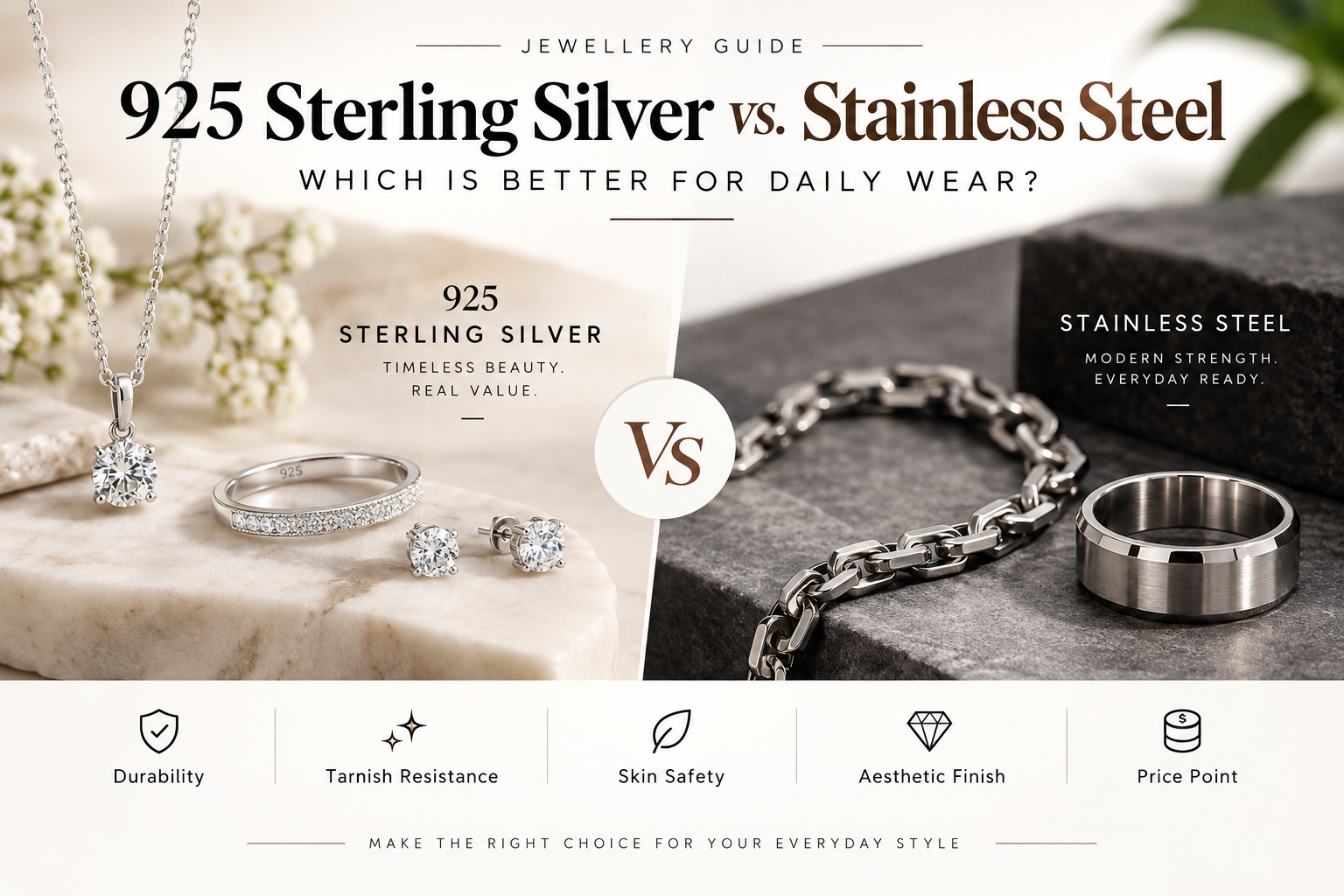
| Feature | 925 Sterling Silver | 316L Stainless Steel |
|---|---|---|
| Durability & Scratching | Softer metal; can scratch or bend under heavy force. | Extremely hard; highly resistant to bending and scratching. |
| Tarnish Resistance | Will oxidize (turn black/yellow) over time due to sulfur in the air/sweat. | Completely rust-proof and highly tarnish-resistant. |
| Skin Safety | Hypoallergenic (Nickel-free). Safe for fresh piercings. | Mostly hypoallergenic, but contains trace amounts of nickel. |
| Aesthetic Finish | Yields a brilliant, bright white luster. Can be crafted into intricate, delicate designs. | Has a slightly darker, industrial grey undertone. Best for chunky, geometric designs. |
| Price Point | ₹1,200 – ₹5,000+ (Appreciates in base value). | ₹500 – ₹2,000 (No resale value). |
If you live in coastal cities like Mumbai or Chennai, the salt in the air accelerates silver oxidation. Stainless steel will survive ocean humidity and daily showers without a second thought. However, steel's hardness prevents jewelers from crafting the delicate, micro-pavé stone settings popular in Indian ethnic wear.
If your daily style leans toward chunky gold-plated hoops or thick paperclip chains, stainless steel (finished with PVD gold plating) offers unbeatable durability. If you prefer dainty solitaire pendants, engagement rings, or intricate traditional motifs, 925 sterling silver is mandatory, as it allows for fine craftsmanship and brilliant stone setting.
Yes, clean water will not damage sterling silver. In fact, the mild soap and water can wash away skin oils that cause tarnishing. However, you must avoid exposing silver to sulfur-heavy municipal water, hot springs, or harsh shower gels.
Gold plating generally lasts longer on stainless steel. Modern steel jewellery uses Physical Vapor Deposition (PVD), a vacuum-coating process that binds the gold at a molecular level, making it highly resistant to fading. Gold plating on silver (vermeil) is usually electroplated and will fade back to silver with heavy friction.
Line a bowl with aluminum foil (shiny side up), add a tablespoon of baking soda, and pour boiling water over it. Submerge your silver pieces for three minutes. The chemical reaction transfers the sulfur from the silver onto the foil, instantly restoring the shine.
Whether you are building a waterproof travel wardrobe or investing in demi-fine office wear, matching the metal to your routine saves both time and money.
✨ Explore our 925 Silver Solitaires for brilliant, office-ready elegance, or browse our full Sterling Silver Collection to find your perfect match.

Free shipping over ₹999

Office hours 9:00 a.m to 5:00 p.m

You have 3 days to return

We ensure secure payment