Shopping Cart
Your cart is empty.
While the evenings of Navratri are dedicated to the high-energy rhythms of Garba and Dandiya, the mornings are reserved for quiet devotion. From the daily Sandhi Puja to the grand Maha Ashtami Havan, observing these rituals requires spiritual focus, fasting (vrat), and physical purity.
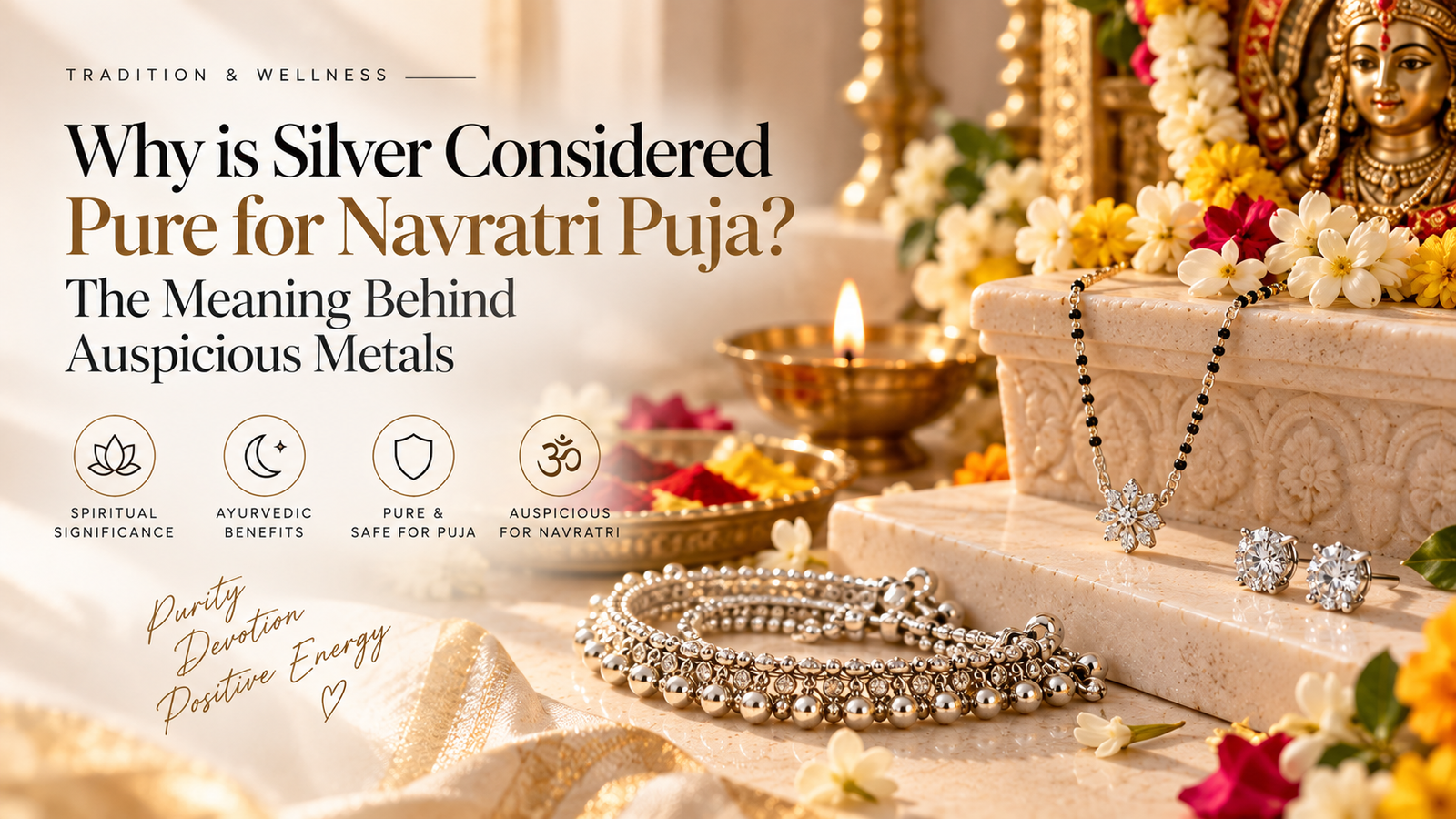
In Hindu traditions, purity extends beyond just bathing and wearing clean clothes; it also dictates the metals you wear against your skin. For centuries, silver has been revered as one of the most auspicious and sacred metals for worship. But why is silver considered shubh (auspicious), and why should you choose pure 925 sterling silver over cheap fashion jewellery during your Navratri pujas?
Here is the deep spiritual, astrological, and Ayurvedic meaning behind this sacred metal, and how to style it for your festive rituals.
The reverence for silver is deeply rooted in ancient Vedic texts. Unlike synthetic materials or cheap alloys, silver is considered a Sattvic metal—meaning it possesses qualities of purity, harmony, and light:
In Vedic astrology, silver is directly associated with the Moon (Chandra) and the planet Venus (Shukra). It represents the divine feminine, making it the ultimate metal to wear when worshipping the nine forms of Goddess Durga (Navadurga).
Silver is believed to be a highly receptive metal. When worn during the chanting of mantras or while sitting near the holy fire (Havan), it is said to absorb and retain the positive, divine vibrations of the environment, acting as a spiritual shield for the wearer.
Fasting for nine days is physically and mentally exhausting. Ayurveda has long advocated for the use of silver as a holistic tool to support the body during times of physical stress:
Silver is naturally cooling. While participating in a Havan (where the ambient heat from the fire can cause discomfort) or during a strict waterless fast, wearing pure silver chains or bracelets helps regulate body temperature and calms the nervous system.
During a fast, your body is detoxifying, and your skin can become highly sensitive. Cheap imitation jewellery made of brass or nickel often triggers rashes and contact dermatitis. Pure 925 sterling silver is entirely hypoallergenic, ensuring your skin remains calm and irritation-free during your extended hours of devotion.
When selecting jewellery for the puja thali or to wear during the Aarti, the composition of the metal matters immensely.
Many women default to heavy "oxidized" tribal jewellery for Navratri. However, most inexpensive oxidized pieces sold in local markets are actually made of "German Silver" or brass alloys, containing zero actual silver. Ritually speaking, mixing impure base metals diminishes the Sattvic purity required for a puja.
To maintain ritual purity, always opt for high-polish 925 sterling silver or 18k gold-plated 925 silver. These demi-fine metals honor the sanctity of the occasion while offering brilliant, modern aesthetics.
When attending a morning puja or sitting for a Havan, your jewellery should be comfortable, lightweight, and culturally respectful:
For married women, wearing a mangalsutra during a puja is highly auspicious. Swap heavy, distracting traditional gold sets for a lightweight 925 silver mangalsutra chain. It sits comfortably at the collarbone, allowing you to bow and perform rituals without heavy pendants getting in the way.
During meditation or while reciting the Durga Saptashati, you do not want heavy jhumkas pulling on your ears. Small, brilliant American Diamond (AD) studs set in pure 925 silver keep your face looking bright and festive with zero physical distraction.
Traditionally, gold is never worn below the waist as a mark of respect to Goddess Lakshmi. Silver payals are an absolute must for Navratri. The gentle, cooling touch of silver on your ankles and the soft chime of the ghungroos bring a deeply traditional and grounding element to your puja attire.
Absolutely. Silver is the base, and gold is equally auspicious (representing the Sun and Lord Vishnu). Wearing 18k gold-plated 925 silver (vermeil) combines the spiritual benefits of both precious metals, making it highly appropriate and shubh for any Hindu ritual.
Dussehra marks the victory of good over evil and is considered an incredibly auspicious day (Sade-Teen Muhurat) to start new ventures and make investments. Buying silver on this day is believed to invite prosperity, wealth, and the continued blessings of Goddess Lakshmi into the home.
To ensure your silver is physically and ritually pure before the first day of Navratri, wash it gently in a bowl of lukewarm water with a drop of mild soap. Avoid harsh chemical dips. Wipe it dry with a soft cloth to restore its brilliant, Sattvic shine.
This Navratri, elevate your spiritual practice by choosing metals that honor both your skin and your traditions.
✨ Explore the Ekaa Jewels 925 Sterling Silver Collection to find pure, hypoallergenic, and deeply auspicious pieces perfect for your festive rituals.

Free shipping over ₹999

Office hours 9:00 a.m to 5:00 p.m

You have 3 days to return

We ensure secure payment